Energy healing has become one of the most talked-about wellness trends in the world today. From Reiki and Therapeutic Touch to Qigong and Healing Touch, millions of people are turning to these modalities to support stress relief, pain reduction, and emotional wellbeing. But what does science say about energy healing? How does it affect the body? And can it work alongside traditional medical treatments?
In this article, we’ll explore the science, the studies, and the real ways energy healing interacts with the human body — all backed by research and expert insights.
🌟 What Is Energy Healing?
Energy healing refers to a range of holistic practices centered on the idea that the human body has an energetic system — sometimes called the biofield — that can be influenced for healing purposes.
Practitioners believe that by manipulating this energy (through touch or non-touch techniques), they can:
- Promote relaxation and stress reduction
- Improve emotional balance
- Support physical healing
- Reduce symptoms like pain and anxiety
Some of the most popular energy healing modalities include:
- Reiki
- Qigong
- Healing Touch
- Therapeutic Touch
- Pranic Healing
These practices are based on centuries-old traditions but are now being studied using modern scientific tools.
🔬 The Science Behind Energy Healing
While energy healing isn’t fully explained by Western science, researchers are beginning to study its effects using measurable physiological markers.
1. The Biofield and Human Physiology
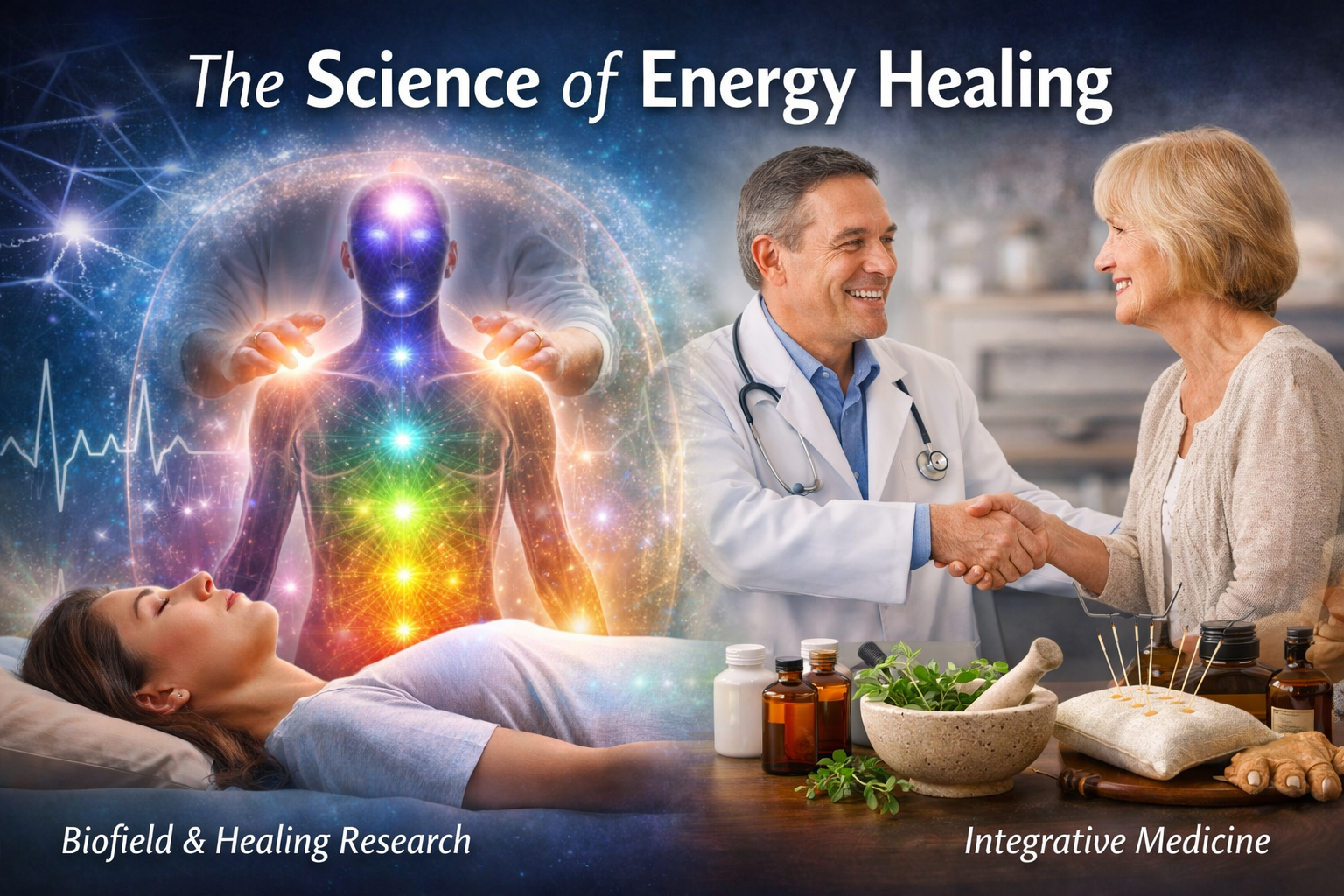
The term “biofield” refers to the idea that the body is surrounded by a field of energy that interacts with the nervous, cardiovascular, and immune systems. Some scientists suggest that shifts in the biofield may correlate with changes in physiology — even if we can’t yet measure this energy directly.

2. Measurable Nervous System Changes
Studies have shown that energy healing can influence the autonomic nervous system, which governs our stress response:
- Reduced heart rate and blood pressure
- Decreased cortisol (the stress hormone)
- Changes in brain wave patterns associated with relaxation
These measurable shifts support the idea that energy healing may trigger the body’s relaxation response — similar to mindfulness or meditation.
🧪 Studies and Research Supporting Energy Healing
Scientific evidence for energy healing is emerging, and while more research is needed, several noteworthy studies point to real effects:
✔ Stress Reduction and Emotional Well-Being
A 2010 study published in Journal of Alternative and Complementary Medicine found that Reiki recipients experienced significant reductions in anxiety and depression compared to control groups.
✔ Pain Management
Research in Pain Management Nursing suggests that energy healing may help reduce chronic pain in conditions like fibromyalgia and cancer-related pain. Patients often report improved comfort and better sleep after sessions.
✔ Immune System Support
Some preliminary studies indicate that energy healing may support immune function — including increased white blood cell activation — which could help with recovery and resilience.
What Research Really Tells Us
Importantly, while results are promising, many studies have small sample sizes or methodological limitations. However, the cumulative evidence points toward measurable physiological effects, especially related to stress reduction and subjective wellbeing.
🔄 How Energy Healing Affects the Body — The Science Explained
Here’s a breakdown of how energy healing is believed to influence body systems:
1. Nervous System Regulation
Energy healing promotes parasympathetic (rest-and-digest) activity, counteracting the fight-or-flight response that keeps our body in chronic stress.
2. Hormonal and Immune Effects
By reducing cortisol and other stress hormones, energy healing indirectly supports immune function and cellular communication.
3. Pain Modulation
The brain processes pain differently when the body is relaxed. Energy healing may reduce pain sensation by altering neural pain pathways.
4. Emotional Balance
Energy healing sessions often encourage mindfulness, presence, and emotional release — which have positive effects similar to meditation and cognitive-behavioral therapies.
🔗 The Connection Between Energy Healing and Traditional Medicine
Energy healing is increasingly being accepted as a complementary therapy in conventional healthcare settings.
✔ Integration in Hospitals and Clinics
Many hospitals now offer Reiki or Healing Touch as part of integrative medicine programs. These services are used alongside standard treatments for conditions like:
- Cancer care
- Pain management
- Palliative support
- Stress-related conditions
✔ Enhancing Patient Outcomes
While energy healing doesn’t replace conventional treatments like surgery or pharmaceuticals, it can enhance patient comfort and emotional wellbeing:
- Reducing anxiety before medical procedures
- Improving quality of life during chronic illness
- Supporting relaxation during recovery
✔ A Bridge Between Two Worlds
More doctors are recognizing that wellbeing isn’t just physical — it’s emotional, psychological, and, for many patients, spiritual. Energy healing offers a complementary approach that aligns with this broader vision of health.
🧠 What Experts Say
Health professionals emphasize an important point: energy healing works best when it’s part of a holistic treatment plan.
Doctors and integrative therapists often recommend energy healing as a tool to support:
- Pain relief
- Stress reduction
- Improved sleep
- Emotional resilience
But it should never replace evidence-based medical treatment for serious conditions.
🧘♀️ Final Thoughts: Why Energy Healing Matters
Energy healing may still be emerging in scientific circles, but it’s already helping millions of people around the world feel better — physically, emotionally, and mentally.
Whether you’re curious about Reiki, considering Qigong, or interested in how holistic practices fit into modern medicine, the science points to one clear conclusion:
Energy healing has measurable effects on the body — particularly in reducing stress and supporting wellbeing — and it can be a valuable complement to traditional medical care.