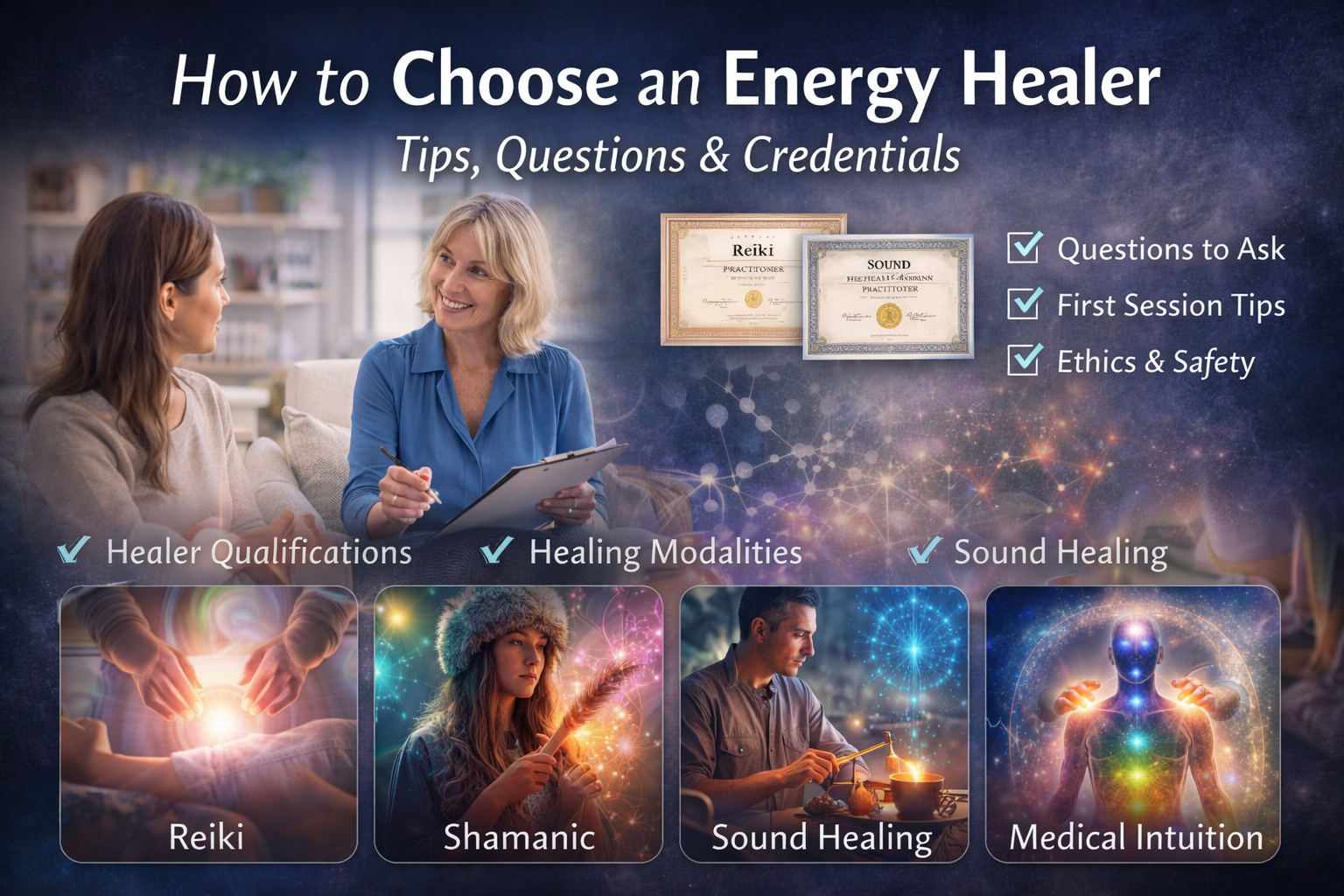
Choosing the right energy healer is an important step in your wellness journey. With so many approaches available today — from Reiki and shamanic practices to medical intuition and sound healing — it can feel challenging to know where to begin.
Whether you’re seeking emotional balance, stress relief, spiritual growth, or complementary support for physical healing, this guide will help you understand how to choose an energy healer, what factors truly matter, which questions to ask during your first session, and how to evaluate healer qualifications with confidence.
🌿 Why Choosing the Right Energy Healer Matters
Energy healing is deeply personal. Because it works with subtle energy, emotions, and the nervous system, the relationship between practitioner and client plays a significant role in the experience.
The right energy healer can help you feel:
- Safe and supported
- Calm and grounded
- Emotionally balanced
- Empowered in your healing process
When there is trust, clarity, and alignment, energy healing sessions tend to be more effective and meaningful.
🔍 Key Factors to Consider When Choosing an Energy Healer
1. Training and Experience
Energy healers come from a wide range of educational backgrounds. Some complete formal certification programs, while others train through apprenticeships, lineages, or years of experiential practice.
When evaluating a healer, consider:
- Formal training or certification in their modality
- Length of time they’ve been practicing
- Continued education and personal development
- Experience working with concerns similar to yours
While experience doesn’t guarantee results, it often reflects deeper confidence, skill, and ethical awareness.
2. Healing Modality and Approach
Different energy healing modalities work in distinct ways. Some are intuitive, others are structured, and many blend spiritual, emotional, and energetic techniques.
Common energy healing modalities include:
- Reiki – a gentle, non-invasive practice focused on balancing the body’s energy system
- Shamanic Practices – spiritually rooted healing methods that may involve journeying, ritual, ancestral healing, soul retrieval, or energetic clearing
- Medical Intuition – intuitive assessment of energetic, emotional, and sometimes physical imbalances, often used to guide personalized healing sessions
- Sound Healing – the use of vibration and frequency, such as singing bowls, tuning forks, drumming, or voice, to support energetic alignment and nervous system regulation
A skilled energy healer should be able to clearly explain their approach, what happens during a session, and how it supports your overall wellbeing.
3. Personal Connection and Intuition
One of the most important factors in choosing an energy healer is how you feel in their presence.
Ask yourself:
- Do I feel comfortable and respected?
- Do they listen attentively and without judgment?
- Do I feel empowered rather than dependent?
Your intuition is a valuable guide. Feeling safe, heard, and supported allows the body and nervous system to relax — which is essential for healing.
4. Ethics and Professionalism
A reputable energy healer practices with integrity and transparency. Ethical practitioners:
- Do not promise cures or guaranteed outcomes
- Encourage clients to seek medical care when needed
- Respect boundaries, consent, and confidentiality
- View energy healing as complementary, not a replacement for medical treatment
Professionalism also includes clear communication about session structure, pricing, and expectations.
💬 Questions to Ask During Your First Energy Healing Session
Your first session is an opportunity to gather information and assess whether the healer is the right fit for you. A trustworthy practitioner will welcome your questions.
Consider asking:
- What training or certifications do you have?
- How long have you been practicing energy healing?
- Which modalities do you use, and why?
- What typically happens during a session?
- How do you work alongside traditional or integrative medicine?
- What might I experience during or after a session?
Pay attention not only to the answers, but also to the healer’s tone and openness. Clear, grounded explanations are a good sign.
🎓 Understanding Different Energy Healer Qualifications
Energy healing is not regulated in the same way as conventional healthcare, but many practitioners pursue structured training and certification to deepen their skills.
Common qualifications may include:
- Certified Reiki Practitioner or Reiki Master
- Shamanic Practitioner Training or Lineage-Based Apprenticeship
- Medical Intuitive Certification or Mentorship
- Sound Healing Certification or Frequency Therapy Training
Some energy healers also have backgrounds in:
- Counseling or psychology
- Massage therapy or bodywork
- Yoga, meditation, or mindfulness instruction
- Integrative or holistic health
While certifications provide helpful context, experience, ethics, and client rapport are equally important when choosing an energy healer.
🚩 Red Flags to Watch Out For
It’s important to feel informed and safe. Be cautious if a practitioner:
- Claims to cure serious illnesses
- Discourages medical treatment
- Uses fear-based or manipulative language
- Pressures you into long-term or costly packages
- Encourages dependency on their services
A responsible energy healer supports your autonomy and encourages self-awareness rather than control.
🌱 Final Thoughts: Choosing an Energy Healer with Confidence
Learning how to choose an energy healer is about balancing education with intuition. When you understand different modalities, ask thoughtful questions, and trust how you feel, you’re far more likely to find a practitioner who aligns with your needs.
The best energy healers:
- Are transparent about their training and approach
- Encourage open dialogue
- Respect your boundaries and beliefs
- Support your healing journey without replacing medical care
With the right practitioner, energy healing can be a powerful complement to your overall wellbeing — offering support, clarity, and balance along the way.